Posts

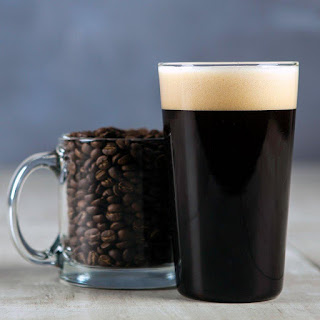
Espresso Stout

Image
  ESPRESSO STOUT     In the beginning, there was black beer. Dock workers, laborers, and masons all desired a post work beverage that had more to it than the traditional pub ales that they had been enjoying for generations. Brewers across Europe developed a darker, more robust style of ale for these men, and named it after those who drank it most: Porters. Some people wanted something even stronger, so stout was invented.  Originally called “stout porter,” the stout was a heavier version of the porter and contained more alcohol, thus making it more stout than its cousin. The history of both black beers is intertwined in such a way that they seemed to grow up together throughout the 18 th and 19 th centuries. The most famous stout has always been brewed in Ireland, with Guinness leading the way. Founded in 1759, Guinness was originally a porter brewery but switched over to stouts in the 1770’s after seeing how popular they were with the Dublin working men. G...

Bitter

Image
BITTER  Modern terminology has betrayed this beer. The Bitter, a traditional pub ale designed for utilitarian purposes, has been kicked to the side in recent years. Drinkable, easy to make, and beloved by generations, the Bitter is a beer for the people. A drinking person's drink.  The Bitter took over for the Mild as the go-to for British pub goers some time in the 18th century. It's popularity bloomed along with the growing use of hops in beer. The Bitter was lighter and crisper that the mild, and the hops provided a different aesthetic altogether. In the latter stages of the 1800's, Bitter's popularity surged to the point of it being considered the "National Drink of England." The Bitter hasn't gone away, either. Today, it has evolved into Session Ales in the United States, and is still produced in great volumes in its home island. Contrary to the popular mythology surrounding English beer, the Bitter is not generally served at room temperature. Especia...

Dark English Mild

Image
DARK ENGLISH MILD  Not a lot is said about the Dark English Mild Ale anymore. It's simply not all that popular. It used to be. In England, and other parts of the UK as well, the Mild was a wildly popular beer for hundreds of years.  Believed to have been first brewed in the 17 century, the Mild spread throughout the isles as a drinkable, low octane beer that didn't have to be aged for very long before enjoying. It was called a young beer or fresh beer because of it's relative youth compared to the heavier beers of the day. At one point, almost every tavern or beer hall in the UK featured a Mild of some kind.  Back in those days, beer styles were less rigidly regulated as they are today. A Mild was more about the impact of the beer, less about its coloration or hop content. A Mild could be dark, like the one we are making today, or golden, like a lightly hopped Bitter. Milds are malt forward, leaving the light hoppy beers to the Bitter world. Caramel and chocolate malts le...

Green Tea IPA

Image
GREEN TEA IPA   As far as IPAs go, this one is fairly mild. The point of this beer, however, isn't to be an IPA, but rather to be a platform for a special adjunct to shine. Green tea pairs well with a lot of things. Its delicate flavors and subtle aroma act splendidly on their own or as a highlight to other foods and beverages. Green tea ice cream, matcha powder in smoothies, and powdered green tea used in baking have all been a part of the culinary landscape for over a decade.  Around that time, we decided to put it into a beer.  We hadn't seen it in our area before, so we thought that we would try it. Turns out, we were on to something. The beer that came out of this experiment was crisp and refreshing, perfect for that time of year when the weather begins to perk up and the chill of Winter is in the rear view. The tea is balanced with the beer, which amplifies the IPA qualities without leaving the green tea in the background.  Green tea has a delicate flavor. It i...

Sour Part 3: The Actual Beer Part

Image
SOUR ALE  We've documented our failures. We've began anew. And now we make that actual beer. Making a Sour Ale is a little more delicate than normal beers. Because of the bacterial elements and lactic acid, certain parts of the beer have to be compromised.  There is a lot of prep work that has to be done before the actual brew day. We detailed the starter and its importance in the previous post, and that has to be nice and happy before adding it. As you wait your 5-7 days for the lactobacillus to reproduce, you should be monitoring it. If the flask is quiet, and you can't discern any activity, the bugs are in good shape and are ready to be added to your beer. If there is activity, and you can see action in the flask, something is wrong and you should take care of those issues before continuing on your path to Sour.  As for the beer itself, this observer is of the opinion that it should be relatively simple. Base malt, some flaked, and an adjunct or two that serve a specif...

Sour Part 2: Restartering

Image
 After figuring out what we did wrong, and there was a lot, we decided to give Sour Ales another chance. Not right away of course, we had to wait for that wound to heal. But now here we are, almost a full year later and wiser, ready to take another shot at it. We did a lot of research this time around. The Milk the Funk Wiki was especially helpful to understand to science side of things, as was relentlessly asking questions to our friends who sour. Through this reading and badgering, we found the first thing that we needed to change: the lactobacillus strain we used was the wrong one. So we got the right one. The other thing we didn't do, despite the strain, was start it. Making the starter, like you would with liquid yeast, will increase the volume of cells that you are going to incorporate into the beer. One of the myriad reason that our first attempt to sour took so long was that we didn't have enough bacterium to efficiently sour the beer. So we made a starter (procedure at...

Sour Part 1: Trial and Mostly Error

Image
 A little bit of history. Not about Sours, some variety of sour has been around forever. The Belgian Lambic style can be traced back almost 800 years, and wild fermentation was the only way to create any alcohol for centuries. Once the industrial revolution happened and into the modern era, the development of Sour Ales has become more refined and far safer than previous generations.  Using wild bacterium and yeast strains can be dangerous if not treated properly. Especially today, with the tighter regulations and more stringent health regulations, traditional souring has to be done in specific facilities, rather than wherever you want. Of course, people still do open ferments in their homes, but we don't suggest doing that around here (Southeastern Connecticut) due to all the nasties that live in our air.  There are a ton of resources about souring these days, and we suggest taking a deep dive into the Milk the Funk Wiki if you really want to get into the nuts and bolts o...