Posts

Saison

Image
SAISON  Imagine, if you will, a time before the internet. Before electricity, even. It's a hot summer day in the French speaking Wallonia region of Belgium, and you've been toiling in the fields for hours, in long sleeves and pants (this was the era of long pants only, unless you were a rich guy and had knickers and stockings, but then you wouldn't be in a field...ever). Your supervisor comes over to you and hands you a bottle of straw colored, hazy, effervescent beer to share with your follow laborers. You find a shady spot, divvy up the beer and enjoy, wiping the sweat from your brow with a sigh of refreshment.  There is no name for this beer, other than what the brewer attached to it. The style is undefined, but distinct. Wild fermentation in open containers provide a specific profile that is unlike any other beers on the market, especially in that region. It's light in body and color, and provides not only a moments reprieve from the blazing sun, but also enough cal...

Russian Imperial Stout

Image
RUSSIAN IMPERIAL STOUT   The Imperial Stout, over the last few years, has become one of the most popular styles in America. Almost every craft brewery, regardless of size, seems to have at least one on their roster. Imperial Stouts are also some of the biggest and baddest beers available, with alcohol content ranging into double figures. This beer is always complex, bold, and malleable. Imperial Stouts have so much going on that they really allow the brewer to get creative with adjuncts and aging options. Many times these are the base beers for new school pastry and coffee stouts, as well as countless bourbon barrel aged stouts.  Originally brewed in the 18th century by Thrale's Anchor Brewery in London, England, it was famously made to export to Catherine the Great of Russia as another boozy option in the cold Russian Winters. The "Imperial" moniker was bestowed upon the style after it was given a royal warrant of trade by the Russian government. Since then, the Imperial...

Ginger Pale Ale

Image
Ginger Pale Ale   Around these parts we don't drink all that much soda (or pop, or cola, or whatever you call it where you're from), but the one thing that we do enjoy is the occasional ginger ale. Effervescent and refreshing, the spicy ginger dances on the palate in ways that evoke colorful and exotic destinations. Ginger is almost always the star of whatever show it happens to be in, regardless of food or beverage. So we decided to us it in a beer. Our Ginger Pale Ale is less of a ginger beer style beverage, and more of a lighter beer infused with fresh ginger. We wanted to make a warm weather beverage as interesting as the fizzy NA drink that we enjoy so much. We use copious amounts of fresh ginger, peeled and ground up in a food processor, to give fresh spice and flavor to a very generic beer, transforming it into an all-star drink.  The ginger root has been used for medicinal purposes for thousands of years. In India, Ayurvedic medicine has implemented ginger in several w...

Summer Ale

Image
SUMMER ALE  It's that time of year again, the time of year where the beer you drink has a direct effect on the rest of your day. When the weather warms up, you want something cold and refreshing, something that you can feel okay about pounding down at the beach, or at a picnic. This probably isn't that beer. This Summer Ale isn't quite as crisp and crushable as many others, but it has elements that most beers these days don't. This Summer Ale is more of a night time beer than a mid-afternoon pick-me-up. It is slightly heavier and far more aromatic than most others, and that is due to the inclusion of chamomile during secondary fermentation.  Chamomile is renowned for its floral qualities and pleasant flavor. Used as a tea, the aroma of chamomile has a soothing property to some and it is often used by herbalists as a sleep aid. It should be noted that there has not been sufficient evidence for any medicinal uses for chamomile, however preliminary research is being done t...

Habanero Pale Ale

Image
HABANERO PALE ALE Okay, listen. We all know what a Pale Ale is, that isn't the point of this beer. This beer was designed to incorporate just a little spice and a whole lot of flavor into an original concoction that we could pair with food or enjoy by itself. We had always wanted to do something with hot peppers, and our first try was a grand disaster. We dumped it after primary fermentation in a move that was both heartbreaking and educational.  That initial effort was a Hefeweizen that we dropped a bunch of habanero peppers into. It turned into an astringent, undrinkable mess. So we went back to the drawing board and rebuilt the beer. We nixed the idea of a Hefeweizen being the base beer and went for something different. We looked at this beer as a chef would look at a dish. We wanted balance. Spicy and sweet, bite and body. We took an approach to the peppers that was very different than the first try as well. Instead of dumping a furnace of heat into the beer, we decided to unlo...

Altbier

Image
  Altbier   In the long history of German brewing, several distinct characteristics have become clear. First, German beer is distinct. The rich traditions of Bavaria, the Rhineland, Hamburg, and Berlin have worked in concert to develop traits that make German beer instantly recognizable in the vast world of beer. Among those great brewing cities, Dusseldorf, in the western part of the country, stands as tall as any other great brewing locale due to its famous beer, called Altbier.  “Alt” is the German word for old, and this old ale has a tradition that dates back over 100 years. Altbier is traditionally top fermented, like English ales and many American craft beers, however, unlike those styles, Altbier was aged during the winter months in ice caves, creating a clean lagered finish that English ales generally lack. Altbier is usually more heavily hopped than other German beers, which rely on aromatic hop additions to create the floral and spicy nose so common in Bavar...

Scottish Export Ale

Image
SCOTTISH EXPORT ALE   The world of Scottish beer has been woefully underrepresented in the American Beerscape. Craft breweries will occasionally unleash a Wee Heavy into the world, but for the most part, Scottish ales have been left in Scotland.  We've been know to dabble in the Scottish arts, ourselves. Our Wee Heavy is a favorite of ours, and the famed Scotch is a well regarded treat in these parts (and we like to throw telephone poles like large weirdos, too), but we have never made a normal Scottish pub-style ale. That's essentially what the Scottish Export Ale is. A burlier cousin of the English ESP and Irish Red, this beer is a malt forward, moderately strong beer that acts stronger than it really is.  Scottish beer is generally placed into one of four categories. The lightest is called a Light (TONS of metaphor there), then comes a Heavy, the Export, and the biggest of all the Wee Heavy. Scottish Export Ales, like those from Belhaven and McEwan's, are generally red...

Espresso Stout

Image
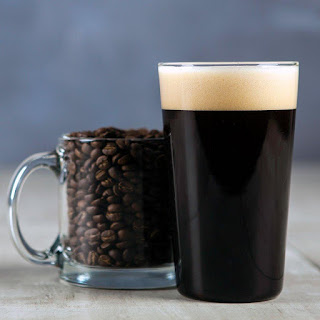
  ESPRESSO STOUT     In the beginning, there was black beer. Dock workers, laborers, and masons all desired a post work beverage that had more to it than the traditional pub ales that they had been enjoying for generations. Brewers across Europe developed a darker, more robust style of ale for these men, and named it after those who drank it most: Porters. Some people wanted something even stronger, so stout was invented.  Originally called “stout porter,” the stout was a heavier version of the porter and contained more alcohol, thus making it more stout than its cousin. The history of both black beers is intertwined in such a way that they seemed to grow up together throughout the 18 th and 19 th centuries. The most famous stout has always been brewed in Ireland, with Guinness leading the way. Founded in 1759, Guinness was originally a porter brewery but switched over to stouts in the 1770’s after seeing how popular they were with the Dublin working men. G...

Bitter

Image
BITTER  Modern terminology has betrayed this beer. The Bitter, a traditional pub ale designed for utilitarian purposes, has been kicked to the side in recent years. Drinkable, easy to make, and beloved by generations, the Bitter is a beer for the people. A drinking person's drink.  The Bitter took over for the Mild as the go-to for British pub goers some time in the 18th century. It's popularity bloomed along with the growing use of hops in beer. The Bitter was lighter and crisper that the mild, and the hops provided a different aesthetic altogether. In the latter stages of the 1800's, Bitter's popularity surged to the point of it being considered the "National Drink of England." The Bitter hasn't gone away, either. Today, it has evolved into Session Ales in the United States, and is still produced in great volumes in its home island. Contrary to the popular mythology surrounding English beer, the Bitter is not generally served at room temperature. Especia...

Dark English Mild

Image
DARK ENGLISH MILD  Not a lot is said about the Dark English Mild Ale anymore. It's simply not all that popular. It used to be. In England, and other parts of the UK as well, the Mild was a wildly popular beer for hundreds of years.  Believed to have been first brewed in the 17 century, the Mild spread throughout the isles as a drinkable, low octane beer that didn't have to be aged for very long before enjoying. It was called a young beer or fresh beer because of it's relative youth compared to the heavier beers of the day. At one point, almost every tavern or beer hall in the UK featured a Mild of some kind.  Back in those days, beer styles were less rigidly regulated as they are today. A Mild was more about the impact of the beer, less about its coloration or hop content. A Mild could be dark, like the one we are making today, or golden, like a lightly hopped Bitter. Milds are malt forward, leaving the light hoppy beers to the Bitter world. Caramel and chocolate malts le...

Green Tea IPA

Image
GREEN TEA IPA   As far as IPAs go, this one is fairly mild. The point of this beer, however, isn't to be an IPA, but rather to be a platform for a special adjunct to shine. Green tea pairs well with a lot of things. Its delicate flavors and subtle aroma act splendidly on their own or as a highlight to other foods and beverages. Green tea ice cream, matcha powder in smoothies, and powdered green tea used in baking have all been a part of the culinary landscape for over a decade.  Around that time, we decided to put it into a beer.  We hadn't seen it in our area before, so we thought that we would try it. Turns out, we were on to something. The beer that came out of this experiment was crisp and refreshing, perfect for that time of year when the weather begins to perk up and the chill of Winter is in the rear view. The tea is balanced with the beer, which amplifies the IPA qualities without leaving the green tea in the background.  Green tea has a delicate flavor. It i...

Sour Part 3: The Actual Beer Part

Image
SOUR ALE  We've documented our failures. We've began anew. And now we make that actual beer. Making a Sour Ale is a little more delicate than normal beers. Because of the bacterial elements and lactic acid, certain parts of the beer have to be compromised.  There is a lot of prep work that has to be done before the actual brew day. We detailed the starter and its importance in the previous post, and that has to be nice and happy before adding it. As you wait your 5-7 days for the lactobacillus to reproduce, you should be monitoring it. If the flask is quiet, and you can't discern any activity, the bugs are in good shape and are ready to be added to your beer. If there is activity, and you can see action in the flask, something is wrong and you should take care of those issues before continuing on your path to Sour.  As for the beer itself, this observer is of the opinion that it should be relatively simple. Base malt, some flaked, and an adjunct or two that serve a specif...